Why Informational Birth Certificates Are Almost Always Useless The Costly Mistake That Stops Applications After Weeks of Waiting
Blog post description.
1/12/20263 min read
Why Informational Birth Certificates Are Almost Always Useless
The Costly Mistake That Stops Applications After Weeks of Waiting
If your passport, REAL ID, Social Security, or legal application was rejected because of your birth certificate, there’s a strong chance you were told something like this:
“Informational copies are not accepted.”
That single sentence sends thousands of people back to square one every year.
The frustrating part?
Most people didn’t choose an informational birth certificate on purpose. They were misled by vague wording, online portals, or third-party services that never clearly explained the difference.
This article explains what an informational birth certificate really is, why it fails for almost every legal purpose, and how to make sure you never request the wrong one again.
What an Informational Birth Certificate Actually Is
An informational birth certificate is a copy of a birth record that is explicitly not intended for legal use.
It may look official at first glance, but it is typically marked with language such as:
“Informational Copy”
“Not for Legal Use”
“For Genealogical Purposes Only”
Those words are not decorative. They remove all legal authority from the document.
An informational copy exists for personal reference or family history—nothing more.
Why Government Agencies Reject Informational Copies Instantly
Government agencies don’t evaluate documents based on appearance. They evaluate them based on legal status.
For identity and citizenship verification, agencies require:
A certified copy
An official seal or registrar’s signature
State-mandated security features
Informational copies fail all of those tests.
When submitted, they are rejected automatically. There is no review, no exception, and no appeal based on intent.
The Most Common Situations Where Informational Copies Fail
Informational birth certificates are rejected for:
U.S. passport applications
REAL ID and driver’s licenses
Social Security cards
Immigration and citizenship processes
School enrollment
Employment verification
Court and legal filings
If the process involves identity, informational copies are useless.
Why So Many People Request the Wrong One
This mistake is incredibly common—and rarely the applicant’s fault.
It happens because:
Online portals use vague terms like “official copy”
Informational copies are cheaper and easier to access
Third-party sites blur the distinction on purpose
People assume they can “upgrade” later
You can’t.
Once you order an informational copy, you must start over to get a certified one.
“But It Looks Official”—Why That Doesn’t Matter
Many informational copies:
Look nearly identical to certified copies
Include seals or stamps (with disclaimers)
Are printed on similar paper
None of that matters.
Agencies look for certification language and authority, not aesthetics.
If the document itself says it’s not for legal use, the process stops.
Informational vs Certified: The One Rule That Never Fails
Here’s the simplest rule you can follow:
If the birth certificate is being used for anything official, you need a certified copy.
There are no exceptions.
If you’re unsure, assume certified—and usually long-form.
The Real Cost of This Mistake
Ordering an informational copy often means:
Paying fees twice
Restarting applications
Losing weeks or months
Missing deadlines
Paying expedited fees unnecessarily
The small upfront savings of an informational copy often lead to much higher costs later.
Why Online Advice Often Gets This Wrong
Many articles say things like:
“An official copy should work”
“Most agencies accept any state-issued copy”
“You can request a cheaper version first”
These statements are misleading or flat-out wrong.
When it comes to legal use, only certified copies count.
How to Make Sure You Never Choose Wrong Again
Before requesting a birth certificate, ask:
Is this for identity, citizenship, or legal purposes?
Does the option explicitly say “Certified Copy”?
Does it mention legal acceptance?
If the answer is unclear, don’t proceed until it is.
Want to Avoid This Mistake Completely?
Most people don’t fail because the process is hard.
They fail because the difference between certificate types isn’t explained clearly.
That’s exactly what this guide is built to fix:
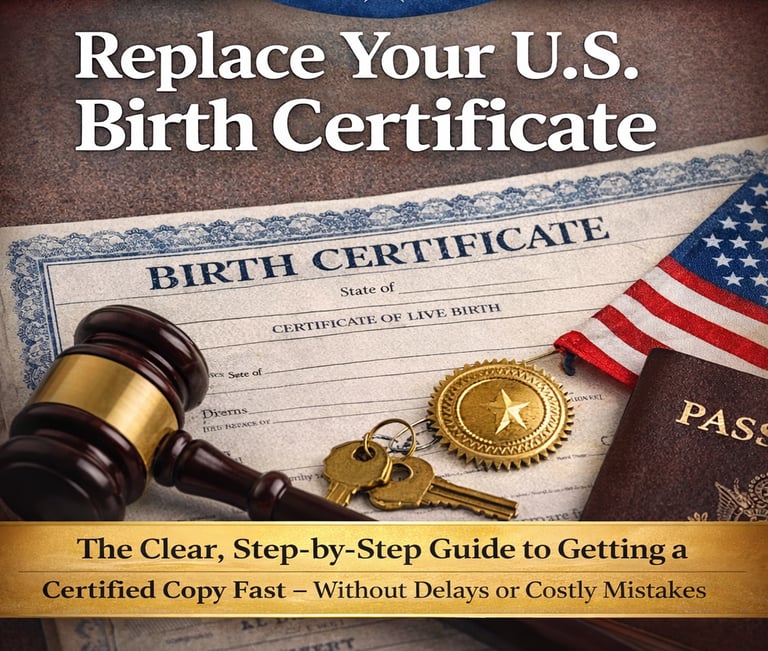
👉 Replace Your U.S. Birth Certificate
The Clear, Step-by-Step Guide to Getting a Certified Copy Fast — Without Delays or Costly Mistakes
It shows you:
Which certificate you actually need
How states label and issue copies
How to avoid misleading options
How to submit correctly the first time
So you don’t pay twice—and you don’t lose time.
Certified only. One submission. Done right.https://replacebirthcertificate.com/replace-birth-cert-guide
Help
Fast, clear help for your birth certificate
Contact
infoebookusa@aol.com
© 2026. All rights reserved.